Absolute dating applied to the knowledge, analysis and conservation of Cultural Heritage: The case of vaulted fountains
Autores:
González Montes, Beatriz
Sanjurjo-Sánchez, Jorge
Gutiérrez González, José Avelino
Resumen:
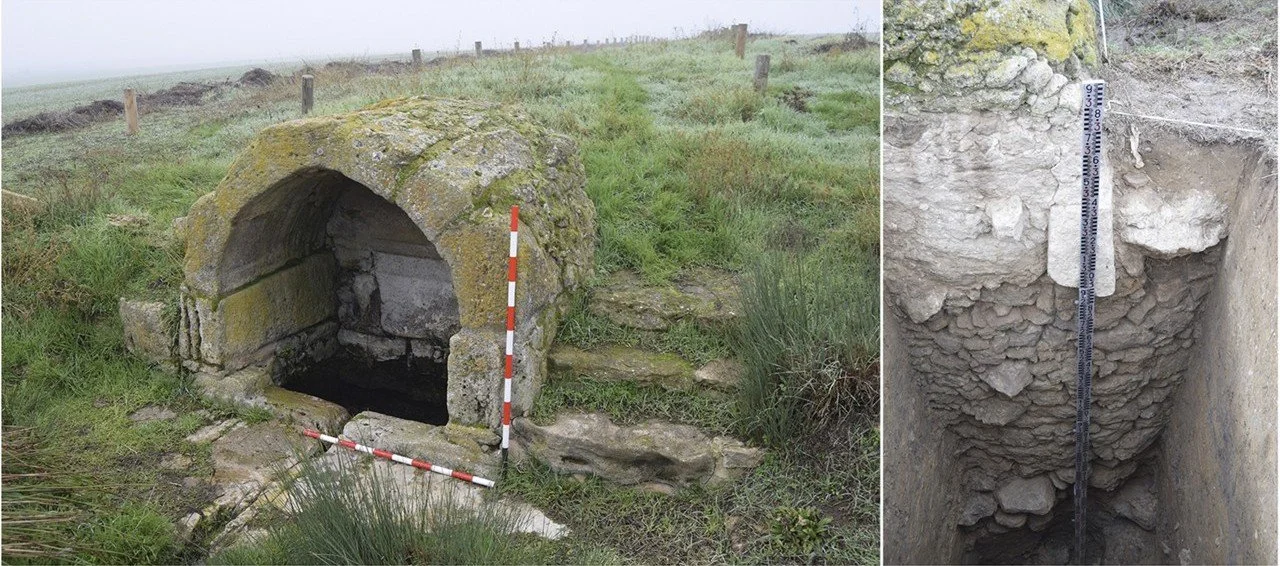
Vaulted fountains with a lower reservoir (beneath the vault) are hydraulic structures characteristic of the Iberian Peninsula, although examples have also been found in France and Italy. For morphological and toponymic reasons, due to their association with nearby archaeological sites, and above all due to the scarcity of systematic work and archaeological interventions, and the absence of dating, they have traditionally been attributed to the Roman period. The main objectives of this study were to confirm or deny for the first time this chronological ascription using absolute dating methods, since the chrono-cultural attributions that have been made to date are based on stylistic and architectural criteria. At the same time, another of the objectives was to make these structures more visible and contribute to a better understanding and conservation of these structures, which have been little studied and subjected to destruction and dramatic alterations, due to ignorance and lack of protection, largely due to the fact that they are frequently found in rural environments.
In this study, two archaeological interventions were carried out that allowed samples to be taken that were associated with a coherent stratigraphy. The first of these was the excavation of the fountain of San Pedro de Villafáfila (Zamora, Spain), where two samples were obtained: a piece of wood was dated using 14C; and a mortar sample was dated using OSL. The results of the combination of both showed that the structure was built in the late Middle Ages. The second archaeological excavation was conducted at the fountain of Valdealcón (León, Spain); in this case only a 14C dating of wood was carried out because it was not possible to recover enough mortar for OSL. The resulting date was very similar to that of the intervention in Villafáfila.
The results have cleared up any doubts about the historical ascription of the vaulted fountains, as once their chronological horizon was known, documents and other evidence, such as toponymy, were located, which further substantiate that they belong to the late Middle Ages. Finally, these data, together with the new visibility of these structures, will hopefully benefit their conservation, protection and enhancement.
Palabras clave: Vaulted fountains; OSL; 14C; Livestock; Councils
Link: https://www.sciencedirect.com/science/article/pii/S1296207426000622